Goals for the week
- Keep reading Relph – I need to get through more of it
- Keep developing updated graphics – begin with the character, THIS WEEK then the setting… with a view to then creating a new prototype that has all my own assets in it
- developing a time-space framework
Main thing:
Read – write – make
Mon
Developing box/cover art
I think a good place to start is doing up a box/cover artwork. Have been playing around with watercolours etc. so I think developing something that will then be used for promo etc. and convey some of the feeling is good.
After looking at games of the time (late 80’s early 90’s) they relied heavily on having a painterly artwork to convey a sense of the game.
Purpose:
- convey a feeling of the place
- inspire a sense of adventure
- give a sense of safety and comfort – yes, this is a nice place that i could hang out at for a wee while
How things change…
Over the years, I have taken MANY pictures of Piha. I have venured up the path from the south end of the beach, and then up the hill towards Tasman lookout. That has always been the view that I have seen, through the undergrowth, somewhat sheltered from the elements. I have pitched the Tachihra 4×5 camera (https://www.kenrockwell.com/tech/4×5.htm) several times to take black and white, colour negative and slide film shots of lion rock (to the amusement of passers by…). It is a familiar view of a favourite place. But things change.
I will admit that the next section is had to write – and I am fully aware that I was not present at the time, nor do I lose anything. I have family in the Auckland area, luckily they were not adversely affected.
In Februrary 2023, Cyclone Gabrielle (https://blog.metservice.com/TropicalCycloneGabrielleSummary) made landfall and hit the west coast of the North Island of New Zealand with catastrophic force. 11 people died as a result (https://www.theguardian.com/world/2023/feb/19/new-zealand-cyclone-gabrielle-death-toll-rises-to-11-as-police-fear-more-to-come). There was significant amount of widespread damage: flooding and landslips were at record levels in many regions (https://www.rnz.co.nz/news/national/509128/cyclone-gabrielle-anniversary-looking-back-at-the-devastation-caused).
As a result, there were many tracks at Piha that were destroyed, some irreversably due to large parts of land just not being there any more.
So, this meant that I vetured to different areas. It has necessitated being more aware of the tides as the route I now need to take, when heading to the southern part, goes through a tidal area (the other track did not). This has lead to getting to completely different places – and some of my favourite views so far. As you come in on the main road, it is a similar view of the area – but here, the houses are much futher away – the landscape is significantly dominant – which is what I like.
A series of thumbnail images is below:
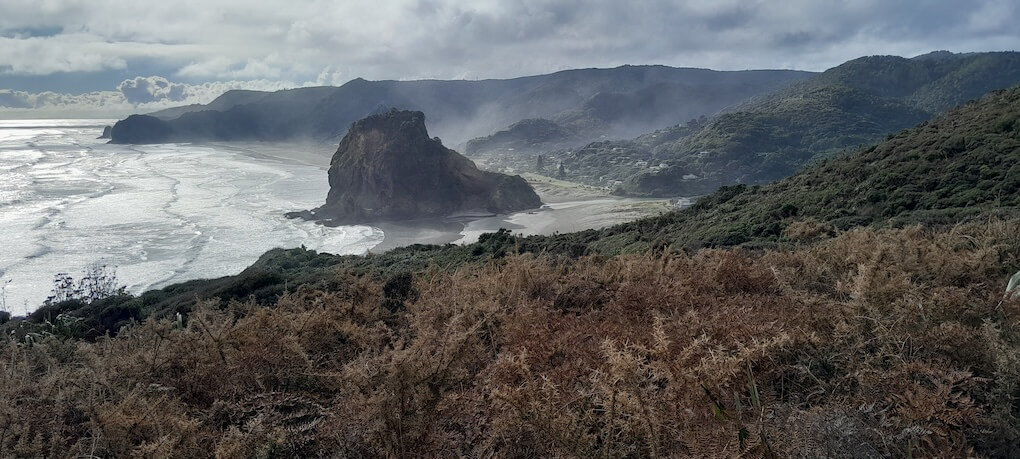
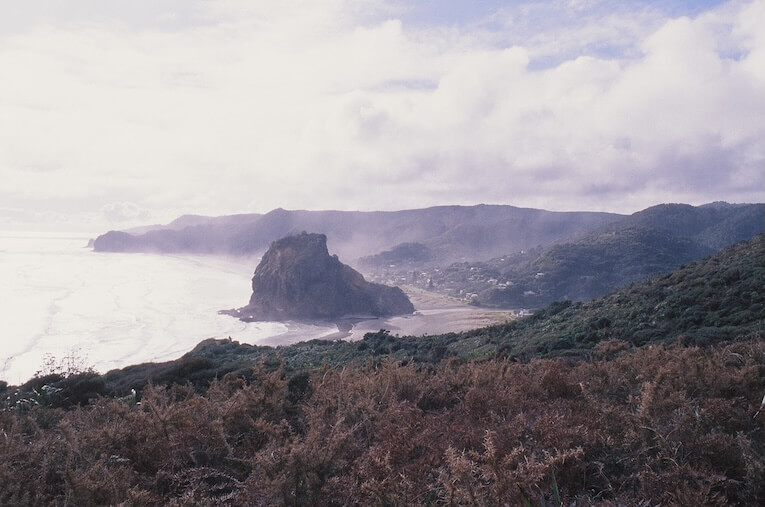
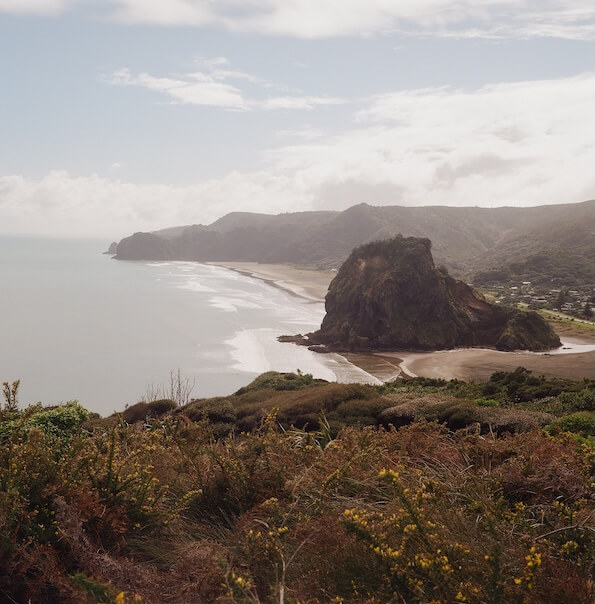
The first two shots were from the same day (approx 1 minute apart). All of the shots show the composition I roughly have in mind, and an indication of some of the colours. I want it to be inviting (rather than intimidating) and feel like a safe, adventurous place – so wanting to look more towards a warmer palette (see the section on https://www.watercoloraffair.com/why-warm-cool-colors-confuse-artists/) The effect of atmospheric distance and how it intereacts with colour is very obvious in the final picture.
I am also going for a square composition – gameboy screen is 9:10 ratio, cart labels are 42.00 × 37.00mm and boxes are 5″ x 5″ x 15/16″ – so, it all sounds pretty square to me…
So, this is what I am going with – and maybe it will just have the toes of a pair of shoes at the bottom – not a whole or part of a figure… At the very least, there will be a lot of sea spray. Obviously.
I have also done with doing it in water colour. Apart from a lot of video game and board game artwork being made uwing water colour – my dear old friend Angus Douglas (https://www.angusdouglas.com.au/) is a mighty landscape water colour artist (please do more Gus:)) and has been an inspiration as long as I can remember. The other thing is Talisman (https://boardgamegeek.com/boardgame/714/talisman), Rigby Encyclopedias () and the endless landscape to name a few key ones – all had illustrated images of landscapes, all in watercolour. So, onwards! I think I am on the track so lets go.
Before continuing on, I want to reitterate how difficult it has been, and continues to be for many residents, and ex-residents of a place that is significant to me.
A quick aside…
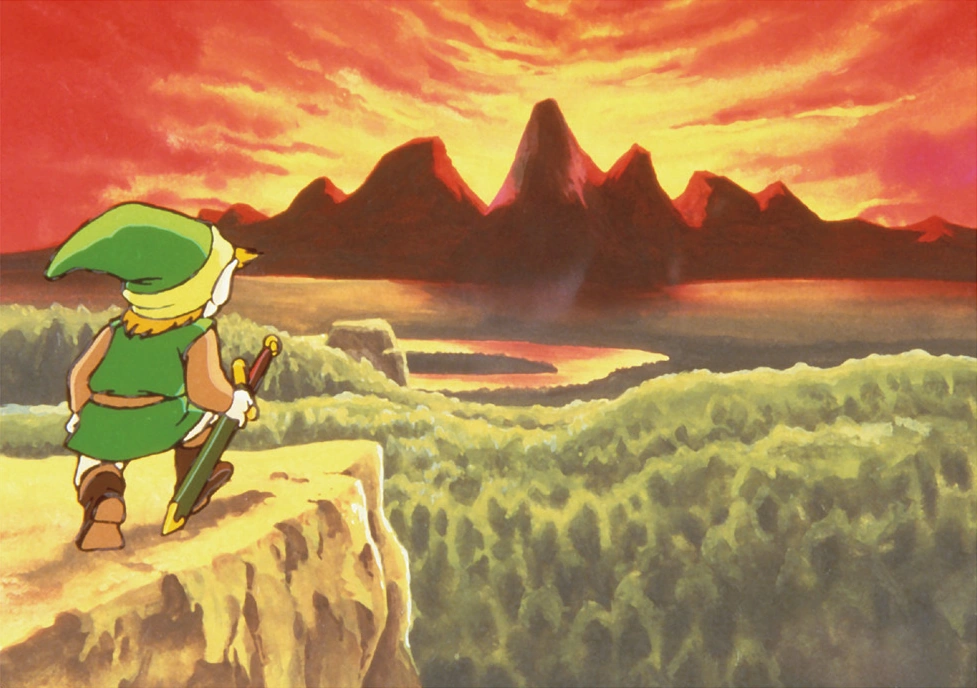
And, as you can see, there was an official image from the original zelda game that is very much along the lines of what I was thinking (standing at a vantage point, looking out across the land). But, I am going to continue along that idea.
I suppose the question I have, from a creative perspective: what happens when you legitimately get to a similar place, but for completely different (or perhaps even not) direction and reasons? But by the same token, at least for the first Zelda game, Miyamoto created it based on his connection with a place (Sonebe, Japan), and this is what I am exploring in this project too. This is not the first time I have been in this place – originally, the project was going to be called ‘undertone’: but as someone pointed out, there is a 2d game called undertale… Ok, so I changed the name, despite my idea having its own meaning and reasons for being what it was, independant of the other project. So, what to do? Be aware of it, acknowledge it and keep going… Or find more variety and call it research;)
Lastly, when working in a specific medium (8 bit video games) on a specific genre (action-adventure games) it is an additional challenge to work in aspects that are original and reflect and represent something that is personally meaningful to the developer/creator. I do like me a challenge.
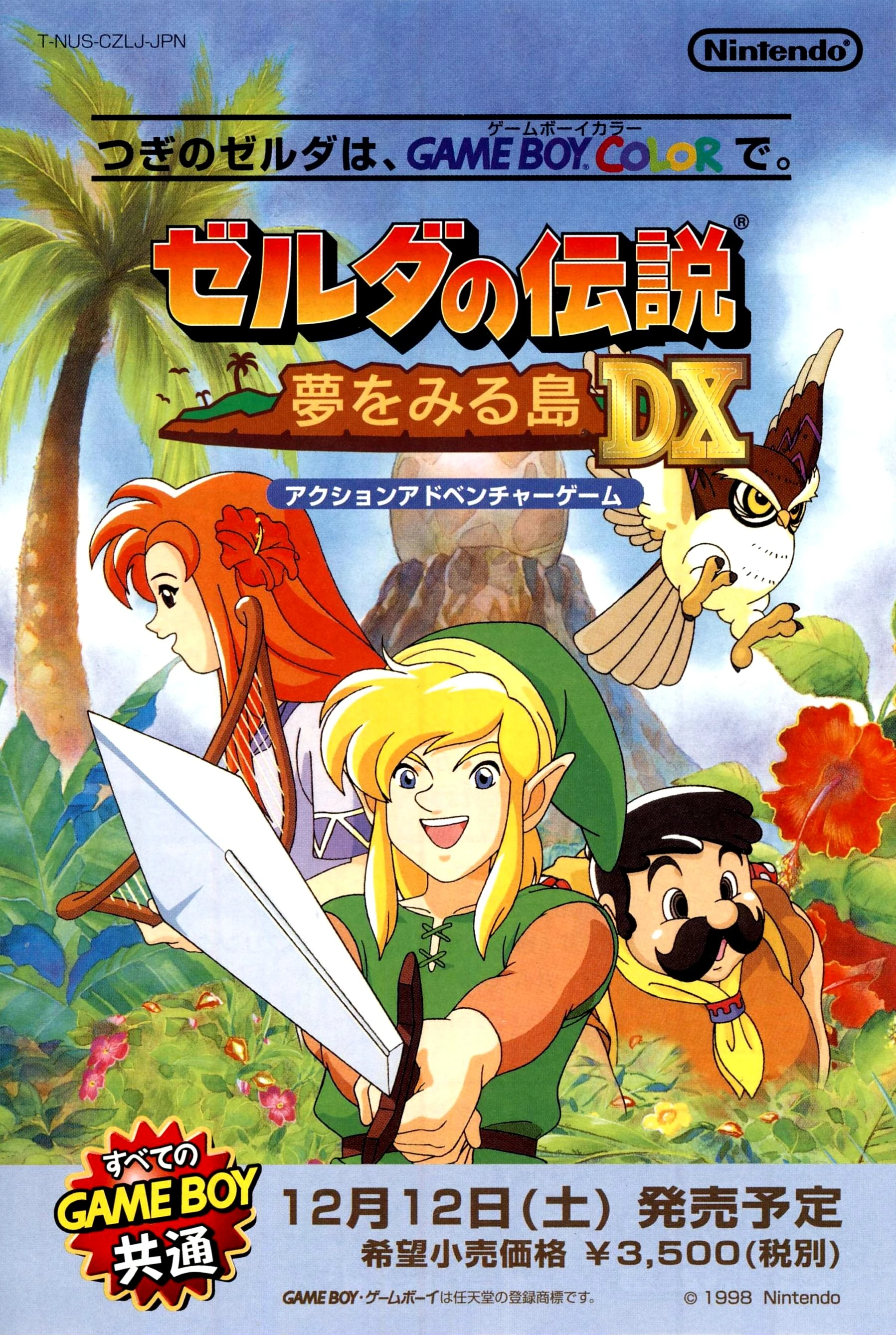
Game Boy Box Art
Japanese Box Art – I recently saw these for the first time – I think they are very compelling – couldn’t be more different from the rest of what the world had…
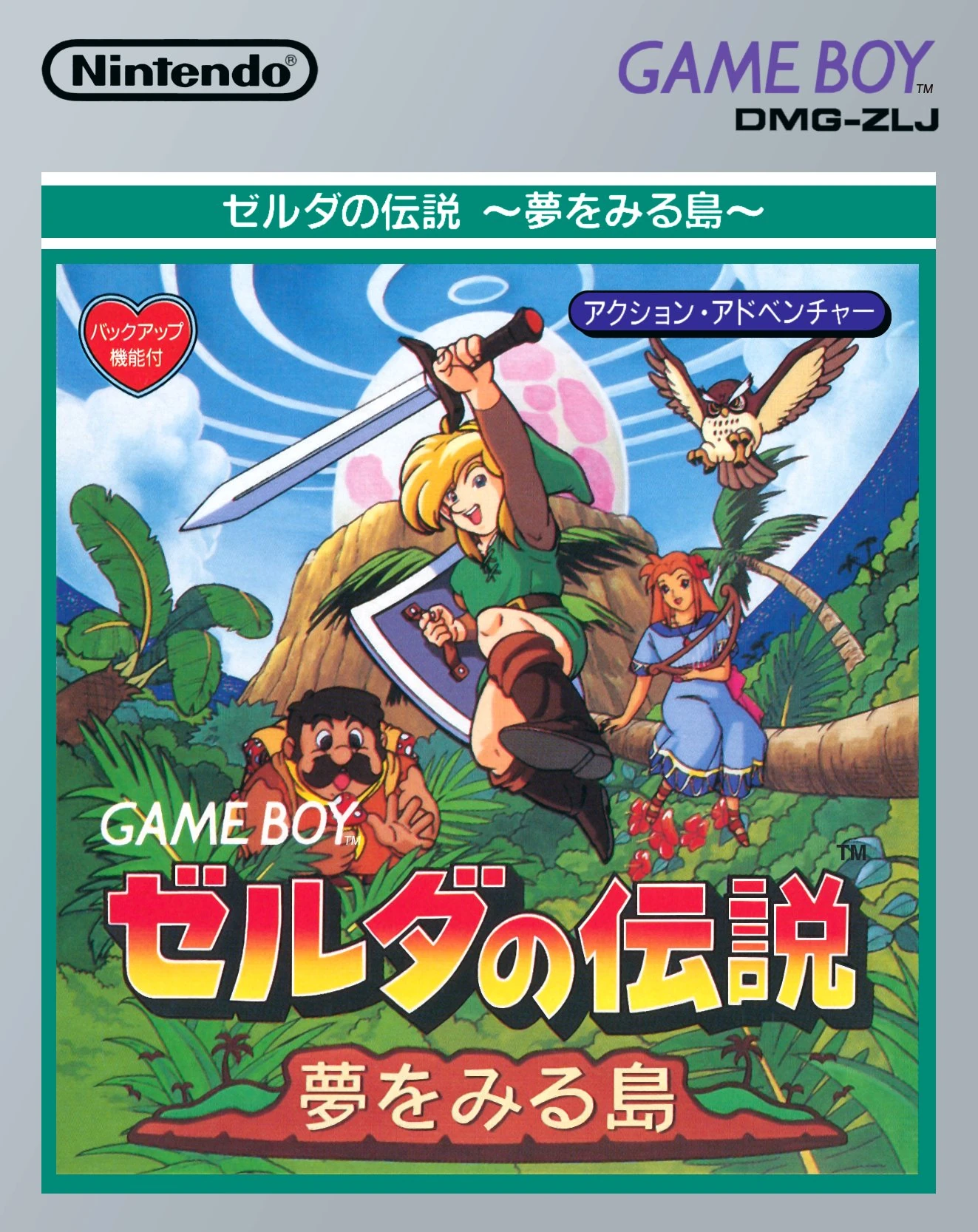
Japanese DX version
They doubled down on the goodness…
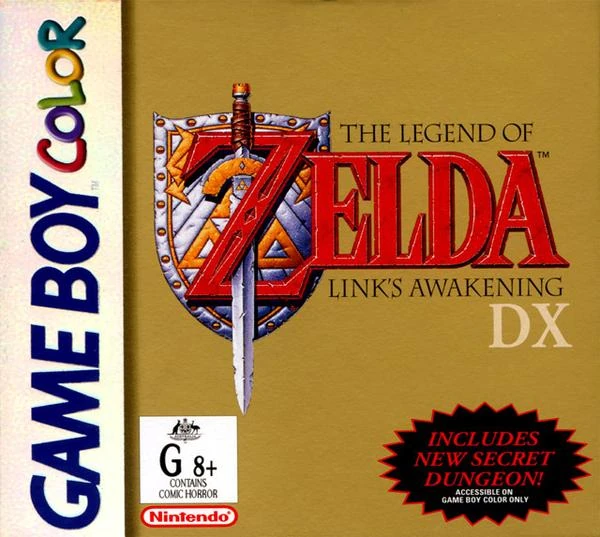
Australian Box Art
Meanwhile…
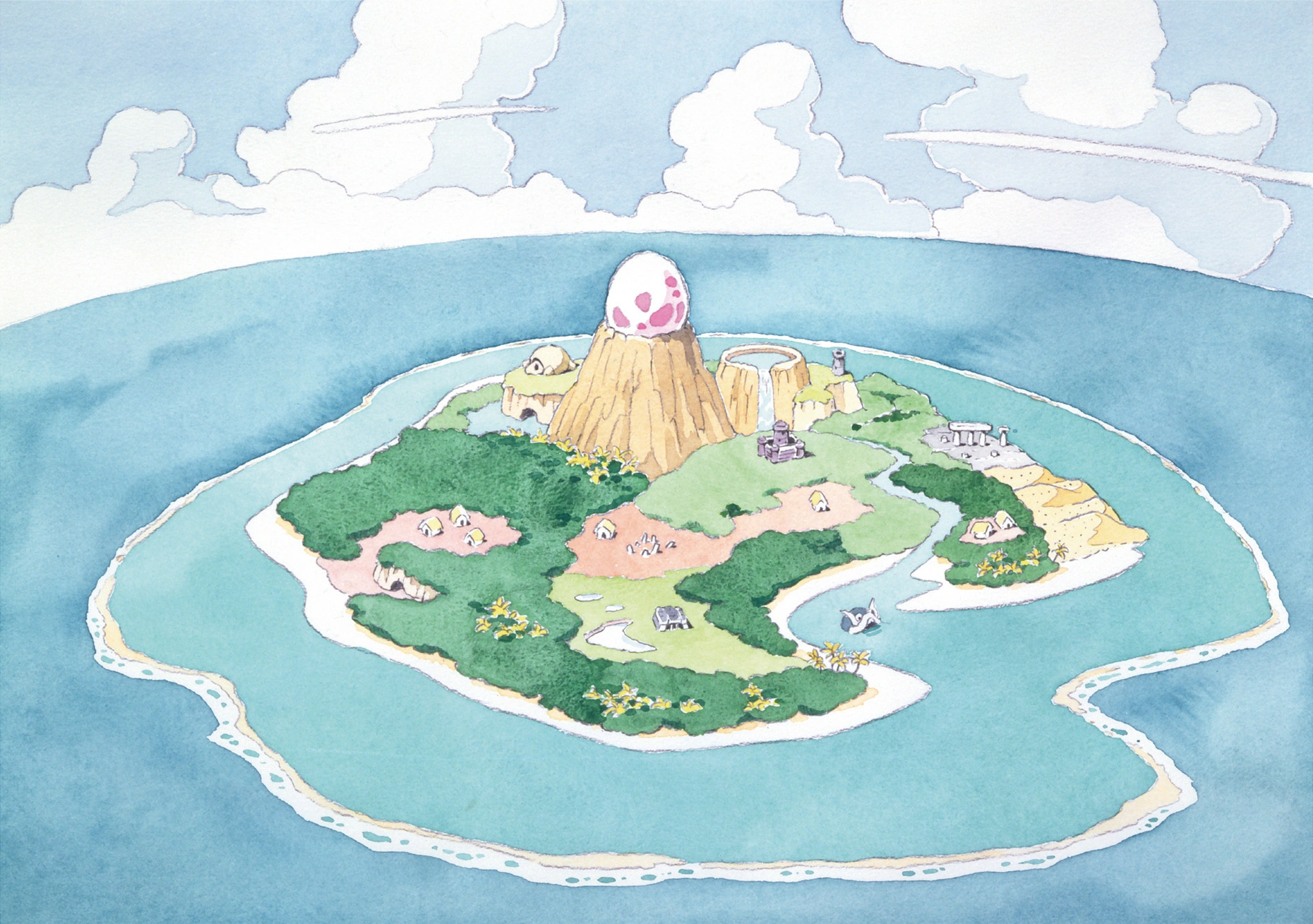
Yay for watercolour! Koholint Island…
But, let’s go back. WAY back to where it all began…
The Legend of Zelda – NES (famicom) – Japanese box art
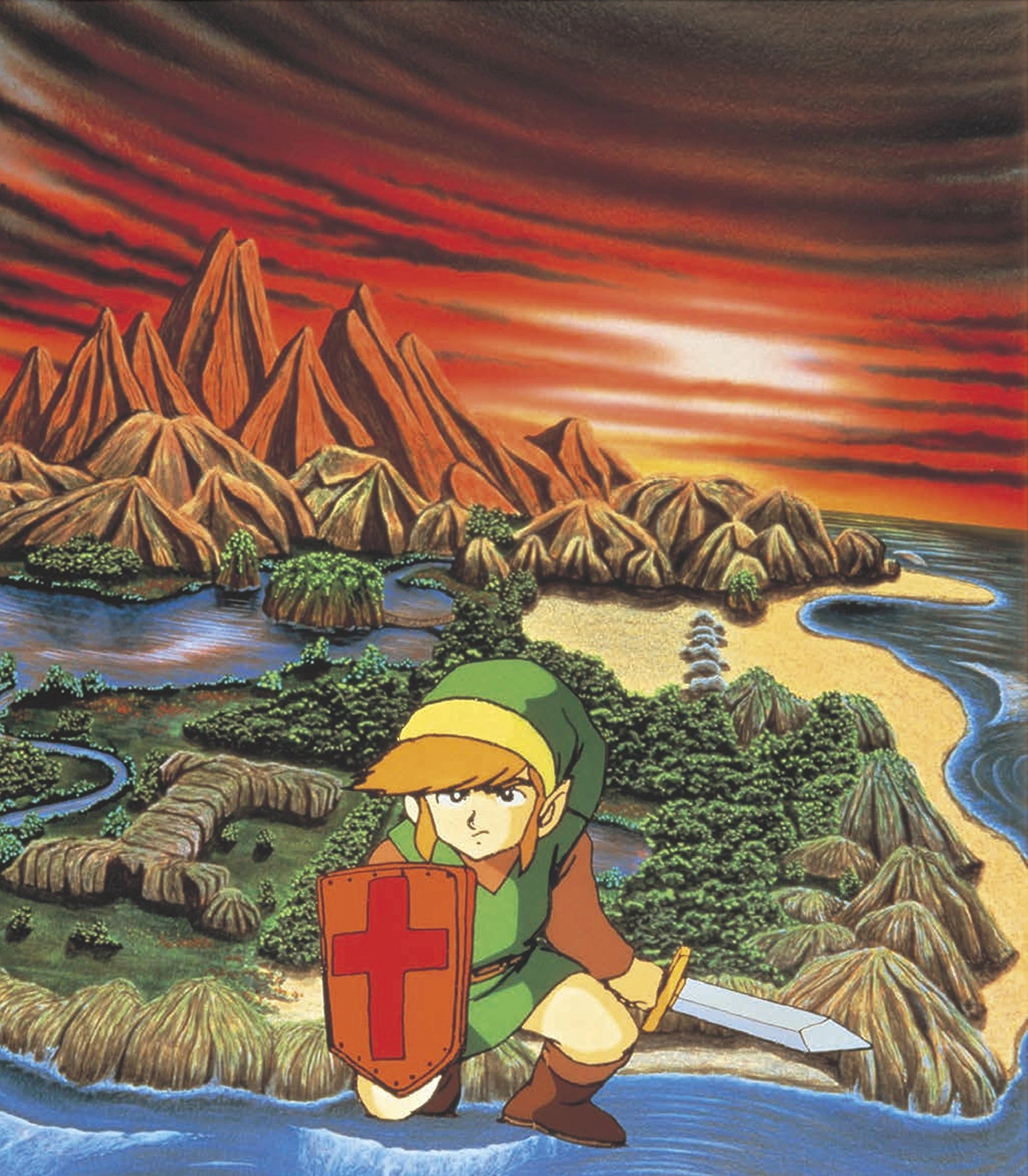
And of course, there is this. And of course, that’s pretty much exactly what I was thinking about for the cover for mine…. From behind – looking out at the world. Ohhhhhhh…..
Official artwork of Link standing over Hyrule…
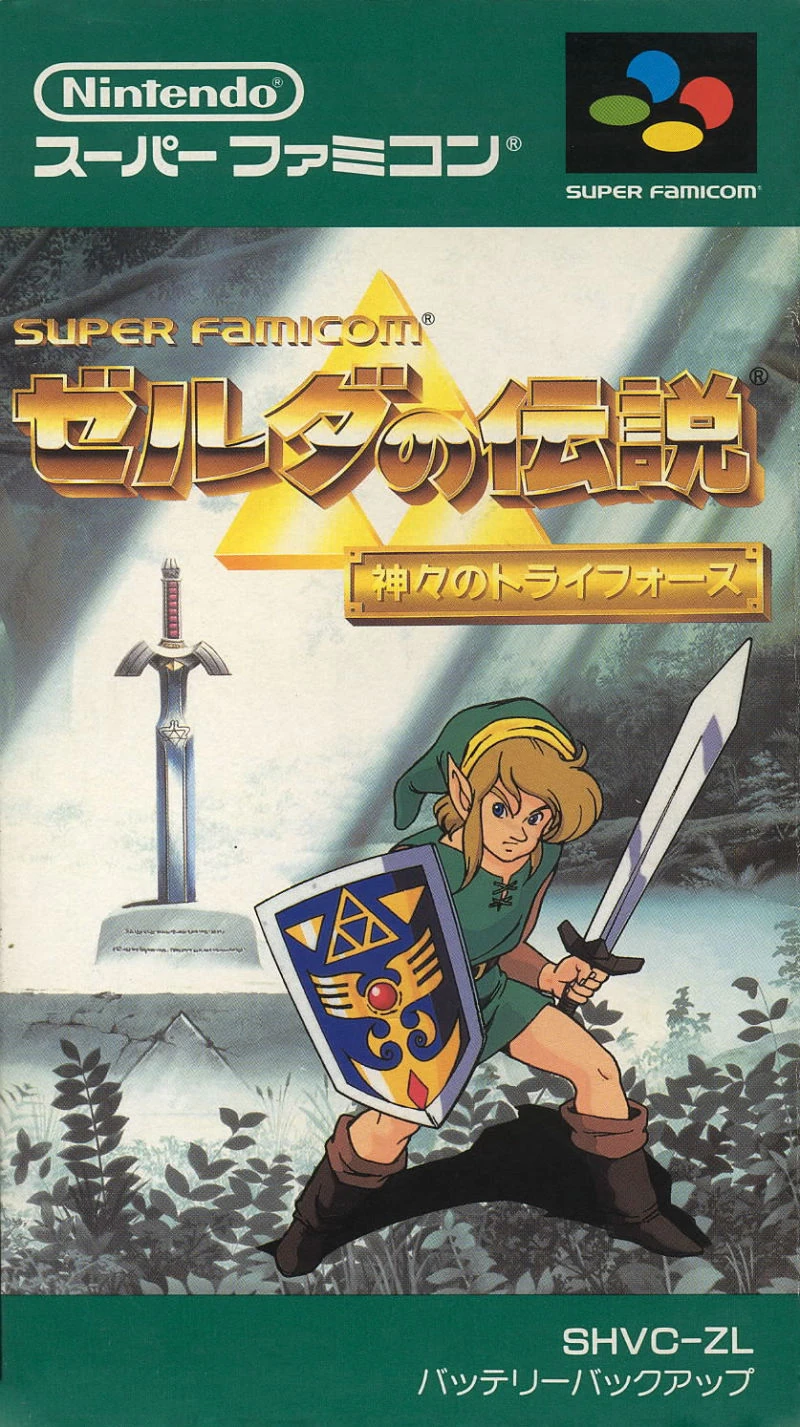
The Legend of Zelda – SNES (super famicom) – Japanese box art
Much more compelling as far as I am concerned… Interesting how the background is desaturated – the title and Link character is vivid. It stands out:)
Tue
developing character
So far, I have sketched out a few pages of hair ideas – will choose a few to develop further…
stand U-D-L-R
walk U-D-L-R
Wed
Today, I am looking at the next iteration proof of concept.
Goals:
- remake a clean version of poc1
- create own graphics
- enough to give an impression of where things are and what you can do in the various places – e.g. just like the first one did, but as a reminder, to stay focused:)
One thing I want to start thinking about is the naming convention – e.g. letter then number – going top to bottom left to right.
NOTE: The prototype itself is NOT a small section of the final game, rather, it is an indicative collection of scenes, somewhat resenmbling the final configuration.
A grid – 3×3
NOTE: remember to allow the player to leave and enter at the same place e.g. if they leave 3/4 of the way down the screen on the left, they appear 3/4 down the screen on the next scene – also, allow the entry point to be far enough into the screen that a transition isn’t triggered (for later reference, refer to how this was done in Links Awakening (Log 2 – 27.4.26 – 3.5.26))
Use the Call Script event
This was a GREAT help:
CURRENT Scene to TARGET Scene
Really works best for scenes that need to look somewhat contiguous… e.g. going through a door from a house to outside could look a bit weird. Or not…
When you hit the trigger (PL for ‘player’)
There needs to be 4 versions – one for each direction – ok, a script could probably be made for that, but this is about as easy as it gets (as in least amount of faffing)
- All have this:
- Store Player Position in Variables: $PLX $PLY
- Going LEFT
- Change Scene to TARGET – set X: 17 – set Y: expression $PLY
- Set direction LEFT
- Going RIGHT
- Change Scene to TARGET – set X: 1 – set Y: expression $PLY
- Set direction RIGHT
- Going UP
- Change Scene to TARGET – set X: $PLX – set Y: 16
- Set direction UP
- Going DOWN
- Change Scene to TARGET – set X: $PLX – set Y: 1
- Set direction DOWN
This logic can be used for all sorts of stuff – the first x/y/dir script can be used for swapping scenes and retaining ANY position…
He also talks about how if you have scenes that are different sizes, you can add or subtract an offset depending on alignment, so that you still get it to look ok.
This is why he uses expressions, so calcs like this can be done.
To begin with, I was trying to do a whole bunch of fancy stuff (faffing around…) – and getting stufk in the scene init stuff – turns out you can set the vars when you are targeting a scene to go to. Handy!
And then to the set up:
Locations EXT
| A1 – cliff | B1 – cave | C1 – forest |
| A2 – beach | B2 – home START | C2 – cafe |
| A3 – lighthouse | C3 – glade |
Locations INT
B2 – home
| living room START EXIT SOUTH | ||
House – start with a single room…
- items
- turntable
- coffee machine – states
- couch – states: static – sitting what can we do? with a book – listening to music
- book shelf – static – browse – search
- display case with cameras and 16mm camera
- guitar
- piano
- activities – main table – projects etc. – – – man cave – synths
atural light
Settings from GBStudio
Palettes – BGP?
Sprites
player – 16px x 16px
anims
- 2 walk down
- 2 walk up
- 2 walk right (flip for left)
Logo
i need one…
Title screen
notes –
- TEXT 1:
- Walk: WASD/Arrow Keys
- Interact: A/Z
- TEXT 2:
- Proof of concept v1
- 8 April 2026
- TEXT 3:
- All temp placeholder
- graphics/sounds
- sourced from GB Studio
- MENU
- New Game
- Continue
- No Save Data
- Found…
For much later – Box and cart sizes
https://www.dimensions.com/element/game-boy
Thu
Had a rest. Everybody needs to rest sometimes.
Fri
Spending some time today developing a time-space framework.
There is a lot in this that will underpin the project, including visual style/animation etc.
This is as much about a set of organising principles as how to INTERACT with it.
So, the process is:
- observe
- record
- codify
- ingest
- generate
- interact
Keeping in mind that the AUTHOR and the PLAYER have the agency and control – the system works for THEM…
It will be interesting how to do this on a Game Boy…
This is still VERY early in the idea development, so it may be conceptually flawed and have holes you can drive a truck through – but, here goes!
There are three key aspects:
Projection
- PAST memory (projecting ‘backwards’ – infinite)
- NOW perception – capturing stuff as i perceive and are aware of it (projecting NOW – finite and in flux)
- FUTURE imagination (projecting ‘forwards’ – infinite)
These things, for the purposes if creativity in this work, occur in the other order – e.g. make plans and project forward (but also intertwined with memory and perception) – then perceiving the NOW (again, elements of projection and memory are here too…) – finally, reflection on past and sense making happens.
Relationships
- 1:1 – direct causality – the classic idea of strait line existence – the white bread…
- 1:many – starting to get a bit more flavour now
- many:many – yep, now we are there…
Most useful irreducible modular unit
What is the smallest unit – and how it relates to others – and is it irreducible and recomibinable? At what point do i want it to be irreducible – e.g. coffee machine and making a coffee is the most useful irreducible modular unit – they then become a pratical module – beyond a blueprint because it is in place and ready to use. It more or less follows a NOUNS – VERBS structure, but more expansive and interlinked (maybe?)
- NOUN – coffee machine
- VERB – make coffee
When the coffee machine is PUT in a place – all the things defined as part of that module, including the inputs and outputs, are available.
Levels
All of these things operate within th ebroader system, and fit thus:
- container level –
- module level – the most useful irreducible modular unit
- sub-module level (even though modules are IRREDUCIBLE, there is still value in being able to descibe sub-module elements)
It is hard to compare the modules – their scale and dimentions are determined by when they get to their most useful irreducible modular unit – so, a house (a container) is broader than a coffee machine (a module) because it can be usefully broken down into parts that can be in other places (such A coffee machine being usable elsewhere)…
Another example is:
- container level – a modular synthesiser in a rack, ready for making squlechy noises…
- module level – a Voltage Controlled Oscillator module (VCO), with several selectable wave forms, octave control, etc.
- sub-module level – a square wave wave form
Affinities – is how aligned various modules might be –
An indication of WHERE WE MIGHT FIND IT – the modular synth is LIKELY to be found at our HOUSE. A VCO can ONLY be found in a modular synth. A SQUARE WAVE can LIKELY be found in a VCO (it can also be found in an LFO)
We can also look at LIKELIHOOD – AND CERTAINTY –
So, how does this help? For describing relevance, and when things may be in time – so, if we go back to a certain time, that may not even have been a thing then – but we can also choose to encounter it anyway – so, the representations have historically relevant timestamps on them conceptually – and can then be used later on for informed content authoring. In some ways, it setting things up to be able to respond to a heuristic design – for example, if we ‘go back’ to an earlier time, by default, we can interact with things that are
If there is a clash after the heuristic is run, how is the decision made?
Another aspect that inflences heuristics is what the player has done thus far – so, their actions may have an impact on some catgories.
Summary
These ideas work along side one another. I thought about how I am CAPTURING autobiographical moments, and documenting them. Again, the things that are happening are, the actual thing in question, as discussed above (most useful irreducible modular unit) and where they operate within the below, broader concept of time:
It is interesting how, although this is mostly about TIME, the lanuage used to explain it is very much grounded in SPACE.
Sat
Thoughts around how to describe the project
Perhaps conceptualising and describing it as an interactive scrap-book – with gamelets is a better way. Or, going back to the museum idea as a conceptual underpinning of the overworld… Using terms like ‘game’ and ‘overworld’ have many connotations for others that conceptual push it into a particlar direction for them – I am not TOO concerned about it at this stage. But it can make it dfficult to have conversations with people about, because they are heading in very different directions – which is fine if they are in the conceptual local neighbourhood – but sometimes they are in another country, or at the other side of universe…
Its also a celebration of good times.
- Finish off tasks or, if done – start another task…
Sun
A quick catch up session